
Actually I have been burying my kitchen waste into bins with old garden soil that I saved after recycling them from old pots. Reusing the used soil but adding kitchen waste to provide the natural fertiliser, saves cost of buying fertilizer and soil and recycle kitchen waste. I noticed that these garden soil cannot be used direct for gardening as these garden soil seems to harm the roots of newly planted plants so I have to leave them out to dry or sun for at least a week or more before using them as garden soil.
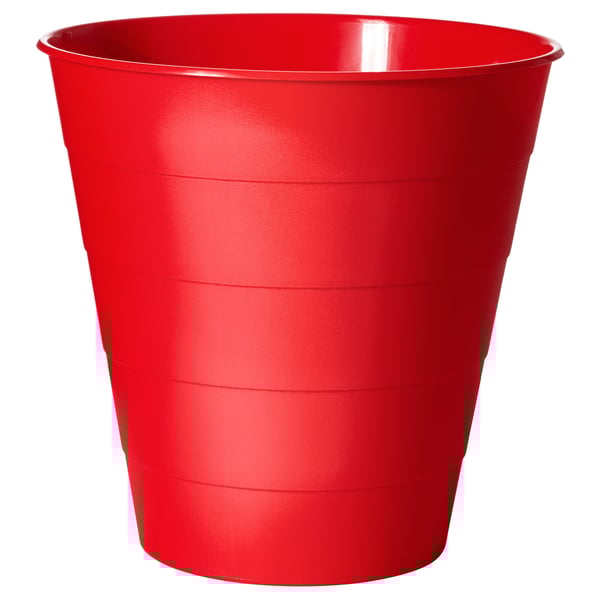
I decided to start composting. Since I am using soilless potting soil for my edibles, I prefer to use compost to add to my edibles pot. I do not have any proper equipment right now, so I use a IKEA FNISS Waste bin, red, 10L and a red lid as a starting point since I have 3 such bins available. I did not make any holes at the bottom of the bin since I have not decided whether this will be my final setup.
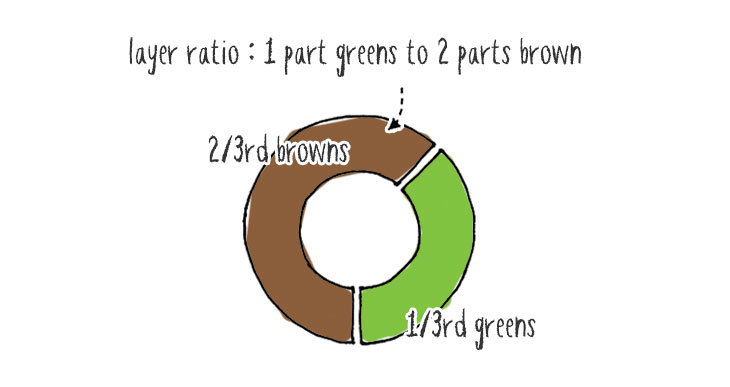 |
| Source: https://helpmecompost.com/compost/basics/brown-to-green-compost-ratio/ |
Composting includes a balanced "browns mix" and "greens mix." Here's what greens and browns mean:
- Greens are materials that are rich in nitrogen or protein. They are also the items that tend to heat a compost pile up because they help the microorganisms in the pile grow and multiply quickly.
- Browns are carbon or carbohydrate-rich materials. The main job of browns in a compost pile is to be food sources for all of the lovely soil-dwelling organisms that will work with the microbes to break down the contents of your compost pile. Also, brown materials help to add bulk and help allow air to filter through the pile.
Browns for the Compost Pile
Brown materials for composting include dry or woody plant material. In most cases, these materials are brown, or naturally turn brown. Brown items include the following:
- Fall leaves
- Pine needles
- Twigs, chipped tree branches/bark
- Straw or hay
- Sawdust
- Corn stalks
- Paper (newspaper, writing/printing paper, paper plates, napkins, and coffee filters)
- Dryer lint
- Cotton fabric
- Corrugated cardboard (without waxy/slick coatings)
:max_bytes(150000):strip_icc():format(webp)/composting-greens-and-browns-2539485-01-dbe4545c40444a9c96ad4f56fe03892b.jpg)
Greens for the Compost Pile
Green materials for composting consist mostly of wet or recently growing materials. Green materials are usually green or come from plants that were green at some point. But, this is not always the case. Here are green items:
- Grass clippings
- Coffee grounds/tea bags
- Vegetable and fruit scraps
- Trimmings from perennial and annual plants
- Annual weeds that haven't set seed
- Eggshells
- Animal manures (cow, horse, sheep, chicken, rabbit, but not dog or cat manure)
- Seaweed
:max_bytes(150000):strip_icc():format(webp)/composting-greens-and-browns-2539485-02-a7f571a92af94b7da094766cfbb4b065.jpg)
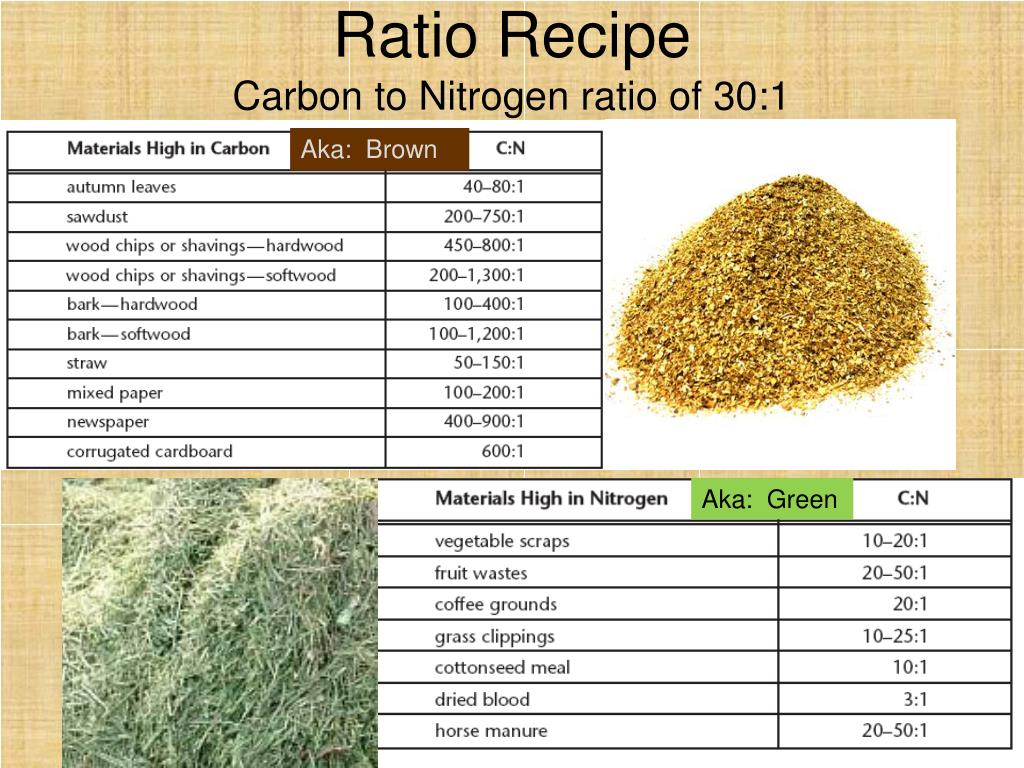 |
| Source: https://image.slideserve.com/855357/ratio-recipe-carbon-to-nitrogen-ratio-of-30-1-l.jpg |
| Source: https://soilseedandgarden.com/what-is-composting-and-how-does-it-work/ |
| Source: https://www.pinterest.com/pin/550565123200510718/ |

No comments:
Post a Comment